At a Glance
What it’s like to actually live in Peregrine
Lifestyle & neighborhood feel
Peregrine is made up almost entirely of custom and semi-custom single-family homes rather than tract-built models. Construction spans multiple phases, primarily from the late 1980s through the early 2000s, which creates noticeable variation by street and elevation.
Common layouts include ranch and two-story designs, often with walk-out lower levels due to slope. Typical home sizes range roughly from 2,000 to 4,500 square feet, with lot sizes varying widely based on terrain. Many parcels are sloped or irregularly shaped, which can affect driveway design, usable yard space, and long-term maintenance.
Because of this variation, individual property characteristics tend to matter more than neighborhood averages when evaluating homes in Peregrine.
Common layouts include ranch and two-story designs, often with walk-out lower levels due to slope. Typical home sizes range roughly from 2,000 to 4,500 square feet, with lot sizes varying widely based on terrain. Many parcels are sloped or irregularly shaped, which can affect driveway design, usable yard space, and long-term maintenance.
Because of this variation, individual property characteristics tend to matter more than neighborhood averages when evaluating homes in Peregrine.
Home types & what to expect
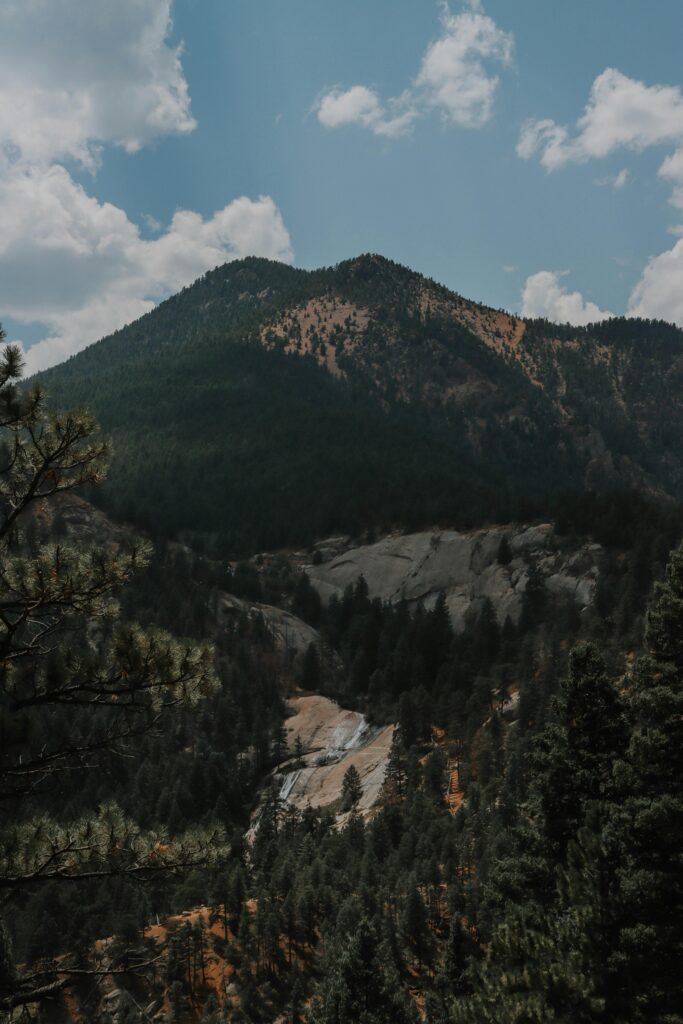
Peregrine appeals to buyers who prioritize a foothills setting, elevation, and separation from denser residential areas. The neighborhood’s steep terrain and limited access points create a quieter, more contained environment, while still allowing practical connections to Garden of the Gods Road, Centennial Boulevard, and the broader northwest corridor.
Advantages
- Established foothills neighborhood with mature trees and elevation-driven views.
- Varied topography with winding roads and non-uniform lot configurations.
- Access to Academy School District 20 schools.
- More secluded feel compared to flatter or newer master-planned areas.
- Practical access to Garden of the Gods Road, Centennial Boulevard, and I-25.
Things to factor in
- Homes may require updates to roofs, windows, or mechanical systems depending on age and prior maintenance.
- Steep lots can mean sloped driveways, stairs, or limited level yard space on some properties.
- Fewer neighborhood-wide amenities compared to newer, master-planned developments.
- Street layouts follow terrain, resulting in less uniform road patterns than flatter areas.
- Limited new construction, with most availability coming from resale homes.
Buyer considerations
- Individual property characteristics matter more than neighborhood averages due to variation in slope, lot shape, and build quality.
- Driveway grade, winter access, and daily ingress/egress should be evaluated property by property.
- Inspection focus should include drainage, retaining walls, and hillside-related construction elements where applicable.
- HOA covenants and architectural controls can vary by filing and should be reviewed early in the process.
- Buyers comparing Peregrine to flatter northwest neighborhoods should weigh separation and views against ease of access and amenities.
Builder insights
- Developed over multiple phases by a mix of regional custom and semi-custom builders.
- No single dominant builder, resulting in wide variation in construction style and quality.
- Most homes date from the late 1980s through early 2000s, with later builds limited.
- Architectural styles and materials vary significantly by street and elevation.
Hidden costs to be aware of
Costs in Peregrine can vary more by property than by neighborhood averages. HOA dues differ by filing and level of covenant oversight, and some homes carry higher insurance premiums due to elevation, construction characteristics, or proximity to open space. Sloped lots may involve added long-term expenses related to drainage, retaining walls, vegetation management, or snow control, particularly on steeper driveways. These factors are not universal but are more common here than in flatter, in-city neighborhoods.
How Peregrine compares to nearby neighborhoods
A quick look at alternatives buyers consider.
Buyers considering Peregrine often also evaluate foothills neighborhoods in the Broadmoor and Cheyenne Mountain areas due to shared characteristics such as elevation, custom homes, and adjacency to open space. All three offer a more secluded setting than most in-city neighborhoods and vary significantly by street and lot.
The differences are largely in development era and pricing structure. Broadmoor and Cheyenne Mountain areas generally feature older housing stock, legacy locations, and higher entry points, while Peregrine developed later with a wider range of custom styles and a more residential, self-contained layout. Peregrine tends to offer similar foothills conditions with less institutional influence and a different cost profile, which can matter to buyers weighing long-term ownership versus initial acquisition.
The differences are largely in development era and pricing structure. Broadmoor and Cheyenne Mountain areas generally feature older housing stock, legacy locations, and higher entry points, while Peregrine developed later with a wider range of custom styles and a more residential, self-contained layout. Peregrine tends to offer similar foothills conditions with less institutional influence and a different cost profile, which can matter to buyers weighing long-term ownership versus initial acquisition.